1-on-1 Comparison Guide
Wegovy vs Zepbound
What’s the difference for weight loss, and which path may fit better?
Wegovy vs Zepbound — sometimes searched as Zepbound vs Wegovy — is one of the most important high-intent medication comparisons in medical weight loss. The right choice is usually not about hype — it comes down to mechanism, side effects, cost, provider guidance, and how well a treatment path fits your overall goals.
Also searched as: Zepbound vs Wegovy
Provider-guided care • No commitment • Takes about 2 minutes
This Wegovy vs Zepbound comparison graphic summarizes how semaglutide and tirzepatide differ across medication pathways, weight-loss treatment context, side effects, cost questions, and provider-guided fit.
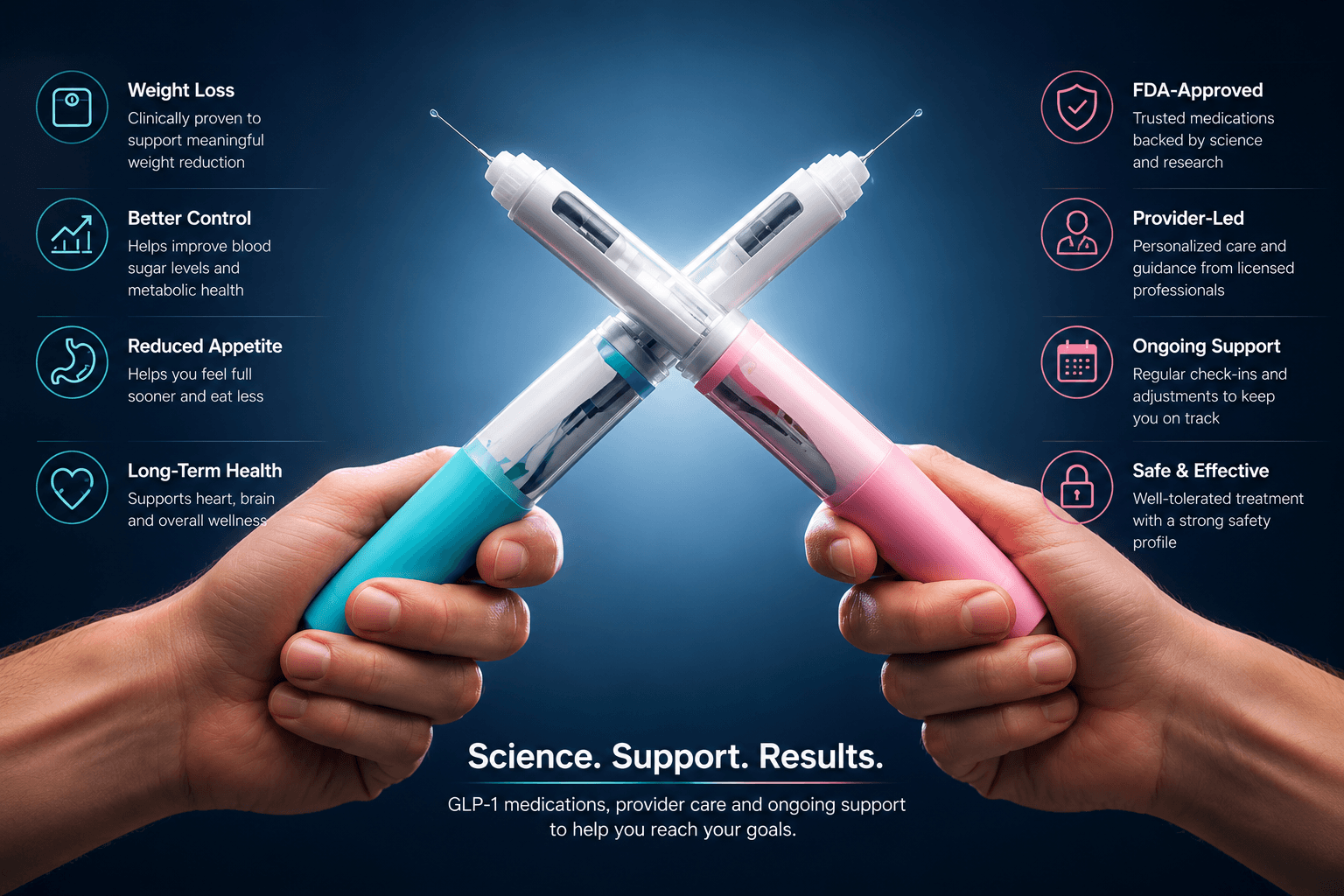
Understand key differences between semaglutide and tirzepatide.
GLP-1 vs dual GLP-1 + GIP pathway differences explained simply.
Designed to help you move from research to a confident next step.
Quick Comparison
Start with a fast side-by-side view of Wegovy and Zepbound across mechanism, treatment framing, cost discussion, and common decision points.
| Feature | Wegovy | Zepbound |
|---|---|---|
| Active Ingredient | Semaglutide | Tirzepatide |
| Primary Pathway | GLP-1 | GLP-1 + GIP |
| Treatment Framing | Structured weight-loss semaglutide pathway | Dual-pathway option with strong weight-loss interest |
| Patient Interest | Often chosen for semaglutide-based weight-loss discussions | Often researched for newer, higher-upside comparison |
| Cost Discussion | Often expensive without coverage | Often expensive without coverage |
| Common Side Effects | Nausea, GI symptoms, appetite reduction | Nausea, GI symptoms, appetite reduction |
Key differences at a glance
Same conversation category, different medication logic
Many patients land on this exact comparison because they want a clearer picture of semaglutide vs tirzepatide before deciding what to ask a provider.
Wegovy
- Often viewed as a more established weight-loss-focused semaglutide option
- Commonly compared by patients who want a semaglutide-based pathway
- Strong fit for people exploring structured provider-guided GLP-1 care
Zepbound
- Uses tirzepatide with both GLP-1 and GIP pathway activity
- Often attracts patients focused on newer options and higher-upside comparisons
- Frequently becomes the direct alternative to Wegovy in decision-stage searches
Which May Fit Best
These are not prescribing decisions, but they can help frame how many patients think about Wegovy vs Zepbound before moving into a provider-guided conversation.
Wegovy may fit best if...
- You want a weight-loss-focused semaglutide pathway
- You are comparing structured provider-guided treatment options
- You want to better understand semaglutide-specific decisions
Zepbound may fit best if...
- You are interested in a dual-pathway GLP-1 + GIP option
- You are comparing newer medications with strong weight-loss interest
- You want to understand how tirzepatide differs from semaglutide
Frequently Asked Questions
Is Wegovy or Zepbound better for weight loss, or is Zepbound vs Wegovy a different question?
Patients often compare Wegovy and Zepbound because both are high-interest options in medical weight loss. The best fit depends on treatment goals, side-effect tolerance, cost, clinical profile, and how a provider plans to guide care over time.
Does Zepbound work differently than Wegovy?
Yes. Wegovy uses semaglutide and works through GLP-1, while Zepbound uses tirzepatide and works through both GLP-1 and GIP pathways. That difference is one reason patients compare them closely.
Do Wegovy and Zepbound cause similar side effects?
Both are often associated with gastrointestinal side effects such as nausea and other digestive symptoms. A provider-guided review helps determine which option may be more appropriate based on your goals and tolerability.
Should I compare Wegovy and Zepbound or start with an assessment?
Comparison pages are useful for education, but the most practical next step is often an eligibility assessment or consultation so medication options can be reviewed in the context of your health profile and treatment goals.
Keep exploring the right next page
If this comparison helped narrow the field, the best next step is usually a deeper read on the exact medication page you are still considering or a fast eligibility screen.
Compare other medications
Want a provider-guided answer instead of guessing?
The fastest way to get clarity is a provider-guided review of your eligibility, goals, and treatment options.